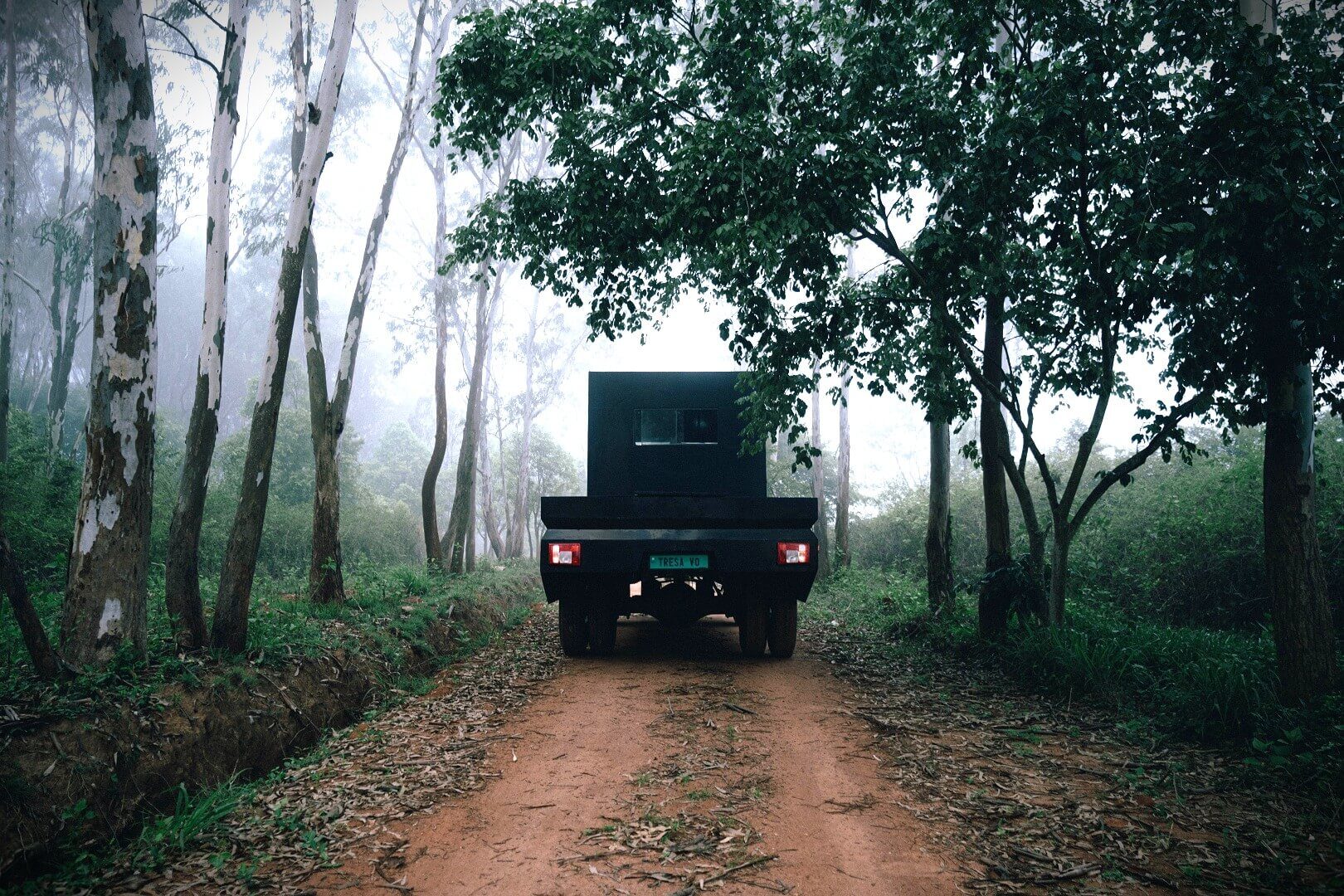
Most of India’s goods travel by diesel truck. Heavy trucks are a small share of the vehicles on the road, but they produce an outsized share of its particulate and carbon emissions. The work is also hard on the people who do it: long shifts, tired drivers and poor visibility make freight one of the riskiest jobs in the country. There are millions of these trucks in India, and Tresa Motors means to replace them with electric ones, one truck at a time.
Nearly a century after the Machani brothers ran steam buses, Ravi Machani co-founded Tresa Motors with Rohan Shravan, who leads it as chief executive. Its chairman is Vinod K Dasari, formerly managing director and chief executive of Ashok Leyland and chief executive of Royal Enfield. The company works in Bengaluru, and its trucks cover the medium and heavy classes, from 18 to 55 tonnes gross vehicle weight.
Cleaner, safer, cheaper to run
Tresa weighs every design decision against two questions: does it cut emissions, and does it keep the person behind the wheel safer? The cab is designed around the driver first, with clear sightlines and a calm interior, on the view that a more comfortable driver is a safer one. There is a third test, cost. An operator will change trucks only if the new one earns more, so Tresa designs its own powertrain and sources its components locally to keep the total cost of ownership below that of the diesel trucks it replaces.
From V0.1 to V0.2
The first truck, the Model V0.1, was shown to the press in July 2023 as a concept for the global market. Its successor, the Model V0.2, is the platform on which Tresa now proves the parts it has built itself: a central computer, a telemetry system for running fleets, 800-volt battery packs managed by Tresa’s own battery management system, a re-engineered centre steering layout and a heat pump that handles every thermal load on board, cabin climate included.
The V0.2 is an 11-tonne-payload platform with an automatic transmission and 24,000 Nm of torque at the wheels. Its six battery modules hold 300 kWh, for a range of up to 600 km, and charge from 10 to 80 per cent in about 20 minutes. Its top speed is electronically limited to 80 km/h, and it can climb gradients of up to 60.3 per cent. The same chassis is meant to carry tippers, tankers, flatbeds and refrigerated bodies, so one truck can serve operators across commerce, logistics and freight. It is built to one specification for India and for export, which keeps certification and spare parts simpler.
Where it stands
Each prototype is a step towards engineering maturity, efficiency and readiness for production, and the V0.2 is now heading out for trials on the ground. In April 2024 JFK Transporters, a logistics company, pre-ordered a thousand Tresa trucks. Tresa says the work is not finished: each trial feeds the next revision, and it will keep refining the Model V until it is the truck it promised.
Sources: Tresa Motors, Home, About Tresa, Model V0.2; Autocar Pro, Vinod Dasari appointed chairman, Model V0.1 unveiled (July 2023), Tresa Motors to roll out electric trucks (October 2023) and pre-order from JFK Transporters (April 2024).