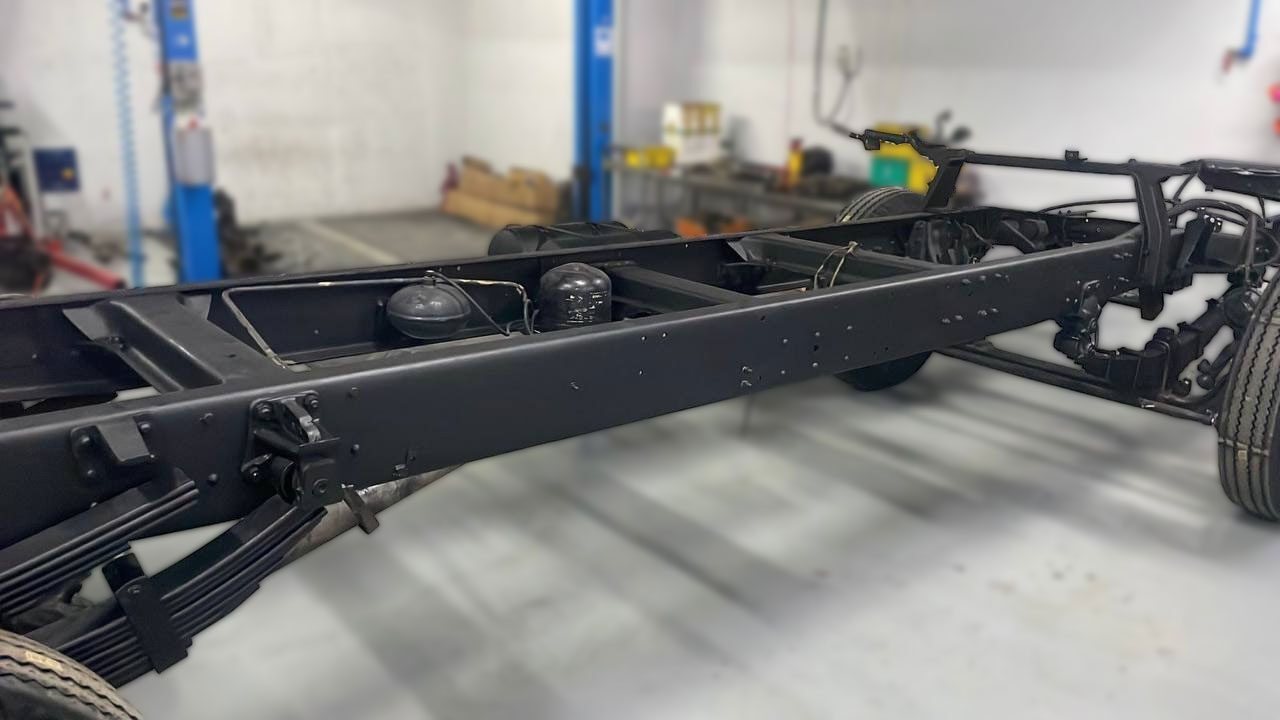
India has millions of diesel trucks, and many of the older ones are already paid for. Their chassis, cabs and axles are sound; what costs money is the fuel, and what does the harm is the exhaust. Tresa Retrofit, the newest of Tresa Motors’ works, starts from that: instead of selling an operator a new truck, Tresa replaces the diesel engine and driveline of the one they have with an electric powertrain built on its own motors and battery modules.
What changes and what stays
The diesel engine, fuel system, exhaust and engine cooling come out. A drivetrain, battery packs, a fast-charging system and control electronics go in. The chassis, cab and, depending on the option, the axles stay. There are two ways to drive the wheels. A central drive turns the truck’s existing propeller shaft, rear axle and differential, and suits tandem-axle trucks and tipper work on steep site roads. An e-axle puts the motor, gearbox and differential in one unit on the rear axle, with fewer parts to service and more room along the chassis for batteries.
Each conversion starts with a review of how the vehicle is used, because the battery is sized to the route. Tresa offers packs of 250 to 300 kWh for 25-tonne tippers, 150 to 300 kWh for 12 to 18-tonne trucks, and 100 to 300 kWh for buses of 7 to 12 metres. Most conversions take a few weeks once the vehicle reaches the workshop. Every retrofitted vehicle is tested and certified by an approved agency before it returns to service, and its registration is updated for the electric powertrain. For operators without trucks, Tresa can find a used one, convert it and deliver it ready to run.
Why retrofit
Tresa’s case is economic. Because the operator already owns the chassis, cab and axles, they pay only for the new drivetrain and battery: Tresa puts the cost at about 40 per cent less than a new electric truck. An old truck that would otherwise go for scrap goes back to work. Charging at the depot overnight or between shifts is usually enough, because the battery is sized to the day’s run.
The first fleet
Tresa is working with one of India’s largest engineering, procurement and construction companies to cut the running costs of its heavy-duty tippers. The fleet in that engagement is a hundred MAN CLA 25.300 trucks, thirteen years old, which often run overloaded to 45 tonnes. On Tresa’s own assumptions (150 km a day, diesel at ₹100 a litre and electricity at ₹15 a unit) it estimates the saving at about ₹2 crore per truck over ten years, with the converted truck costing less than the diesel one from around its twenty-first month. Those figures are projections, and Tresa publishes a calculator on its site for operators to test their own routes.
Retrofit sits alongside the Model V0.2, Tresa’s own electric truck, which is now heading out for trials. Together they are two routes to the same end: fewer diesel trucks on India’s roads.
Sources: Tresa Motors, Tresa Retrofit, Home, Model V0.2.